Heating & Cooling on Portland's Eastside — A Homeowner's Guide
Why the Eastside Is Its Own Climate World
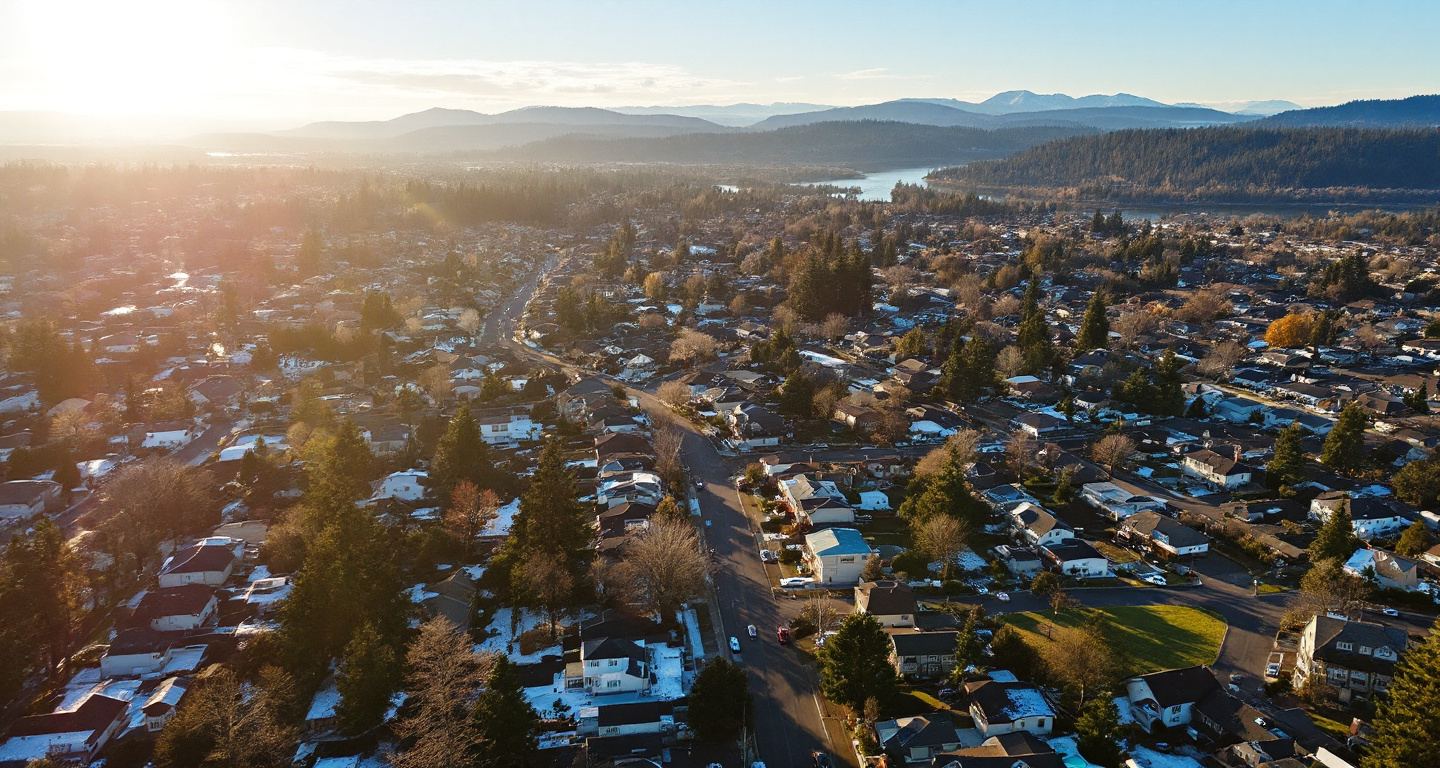
Portland gets talked about as one city with one climate, but that flattens a geography that behaves in genuinely different ways depending on where you live. If your home sits east of I-205 — in Gresham, Troutdale, Wood Village, Happy Valley, Damascus, or the hillside subdivisions climbing toward Powell Butte and Mount Talbert — you already know this. The winters feel sharper. The ice storms seem to find you first. The summer afternoons can bake the upstairs of a newer two-story while the downstairs stays cool.
The most consequential piece of Eastside geography is the Columbia River Gorge. The Gorge functions as a wind corridor between the wet, mild air sitting over the coast and the cold, dry high-pressure systems that dominate eastern Oregon and Washington in winter. When those inland air masses push west through the Gorge, the outflow can deliver a wall of cold air that drops temperatures across the eastern metro faster than interior Portland ever sees. The neighborhoods closest to the Gorge's mouth — Troutdale foremost among them, but also Wood Village and lower Gresham — catch these events with the least buffer. Residents in those communities learn quickly that a winter weather advisory can mean slush in Northwest Portland and a glaze of ice on their own driveway.
Those Gorge east-wind events are why heating equipment in this corridor deserves more thought than a simple efficiency-rating comparison might suggest. A heat pump that performs beautifully through a typical Portland winter can labor when east-wind temperatures drop faster and further than the regional average implies. Backup heat capacity matters here in ways it does not in milder west-side neighborhoods. For federal guidance on energy-efficient home equipment, see the ENERGY STAR program.
Elevation, Terrain, and the Temperature Gradient
Climb away from the valley floor and the picture shifts again. The plateau neighborhoods around Powell Butte, the highlands of Happy Valley, the newer subdivisions in the Damascus area, and the ascending streets of east Gresham all sit noticeably higher than the floodplain communities near the Sandy River or the Columbia. That elevation extends both heating and cooling seasons at the margins.
Newer construction dominates much of this higher terrain. The hillside subdivisions built over the past two decades tend to have tight envelopes by code, but they also tend toward large open plans with significant glazing on south- and west-facing walls. Those design choices create cooling loads that older, smaller homes in the flatland neighborhoods never have to manage. The upstairs of a two-story on a south-facing hillside lot can become genuinely uncomfortable during an extended summer heat event — and the Eastside, shielded from marine air by its distance from the coast, does get real summer heat.
Older established neighborhoods in central Gresham and outer Southeast Portland present different challenges. Homes built before modern insulation standards are common. Original single-pane windows survive in many of them. Ductwork was often designed for forced-air furnaces alone, which means retrofitting air conditioning into an existing system requires attention to whether the ducts can handle cooling airflow without losing capacity in the farthest rooms.
What This Means for HVAC Choices
The combination of Gorge exposure, elevation variation, and housing stock diversity makes the Eastside a place where no single equipment recommendation fits everyone. A modest rancher in flat Gresham faces different decisions than a newer four-bedroom on a windy ridge in Happy Valley. Ductless mini-split systems have become common across the Portland metro for good reason — they can heat and cool specific zones without ductwork and perform efficiently across a wider temperature range than older heat pump designs. But they are not the only answer, and for homes with existing forced-air systems in decent condition, optimizing what is already there often makes more practical sense than wholesale replacement.
Insulation and air sealing deserve equal attention alongside equipment. In a house exposed to Gorge outflow, the fastest dollar is often spent stopping air infiltration at the attic hatch, the garage-to-house threshold, and the crawlspace rim joists — not upgrading the furnace. Efficiency ratings are tested under ideal conditions that Eastside winters do not always provide. For service-area coverage across the Portland metro, see https://sites.google.com/view/efficiency-heating-cooling/service-areas.
About This Guide
The chapters that follow address comfort challenges specific to individual communities — Gresham, Troutdale and the Gorge corridor, Wood Village and Fairview, Happy Valley and Damascus, and the outer-Southeast plateau neighborhoods. Each section covers the particular combination of housing type, terrain, and weather exposure residents there are likely to encounter. The intent throughout is practical and vendor-neutral: understand your home's relationship to this climate so you can ask better questions, evaluate options clearly, and spend your money where it will actually matter.