Home Comfort in Happy Valley: HVAC Considerations for a Fast-Growing Hillside City
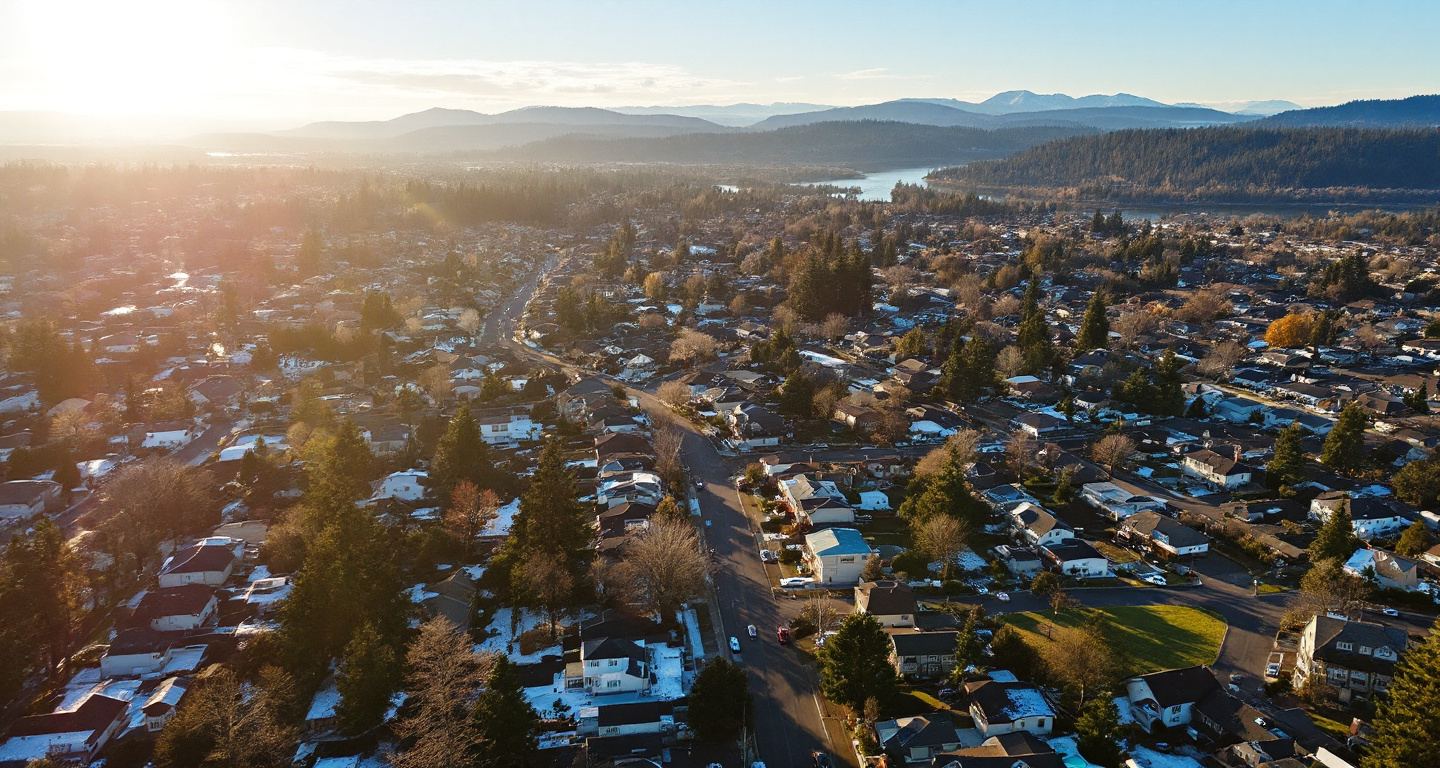
What the Terrain Does to Your Home's Climate
Happy Valley sits several hundred feet above the Willamette lowlands, and the difference in temperature and wind exposure is noticeable year-round. Homes on upper slopes and ridge-facing lots see more wind than properties in sheltered valleys or established tree canopies. Winter cold is often sharper and more persistent at elevation, and summer afternoon heat can arrive faster on south- and west-facing hillsides that catch full sun without the moderating effect of mature tree cover or low-elevation fog.
Newer subdivisions carved into these hillsides often feature large rear exposures and open lot configurations. Heating loads in winter can run higher than the home's square footage alone would predict, and the cooling season, while shorter than in hotter Oregon markets, still demands a system that can handle concentrated afternoon solar gain on an exposed lot. Federal background on central cooling is at https://www.energy.gov/energysaver/central-air-conditioning.
Large, Multi-Story Homes and the Challenge of Even Distribution
Most of Happy Valley's residential landscape runs toward large floor plans spread across two or three levels. That introduces a challenge smaller or single-story homes do not face to the same degree: thermal stratification. Heat rises, which means upper floors can run uncomfortably warm in summer while lower levels stay cool, and in winter, maintaining consistent warmth across a tall interior takes more than a single thermostat and a well-sized furnace.
Larger air volumes require equipment matched to the actual load, but size alone does not solve distribution problems. A home built with a single heating and cooling zone often develops comfort complaints as families discover that the bonus room above the garage is always too hot in July or that the lower-level home office never quite warms up in January. These are not equipment failures — they reflect the mismatch between a one-zone control strategy and a floor plan that behaves like several climate environments stacked together.
Zoning systems address this by dividing the home into sections conditioned independently. A dedicated zone for the upper level, another for the main floor, and a third for a finished basement or bonus space lets the system respond to where heat actually accumulates and where it does not reach on its own. In newer Happy Valley homes with tighter envelopes and better insulation, zoning becomes more practical and more precise because the thermal boundaries between zones hold better. For a local example of HVAC service in Happy Valley, see https://sites.google.com/view/efficiency-heating-cooling/service-areas/happy-valley.
Newer Construction and What Tighter Envelopes Change
One meaningful difference between homes built in recent decades and older Portland metro housing stock is envelope quality. Current building codes require better insulation, tighter window assemblies, and reduced air infiltration compared to what was standard a generation ago. For Happy Valley homeowners, this is generally good news: a well-built newer home holds conditioned air more effectively, which reduces operating costs and makes the system's job more manageable.
The flip side is that tighter homes accumulate indoor air differently. Without the natural air exchange that drafty older homes provide, moisture and indoor pollutants can build up more readily. This is why mechanical ventilation matters more in well-sealed newer construction. Homeowners who notice stuffy air or elevated humidity indoors, particularly during heating season when windows stay closed, are often experiencing the natural result of a tight envelope without adequate ventilation support. Neighboring Clackamas is covered at https://sites.google.com/view/efficiency-heating-cooling/service-areas/clackamas.
Planning for Comfort Across Both Seasons
Because Happy Valley winters are real and its summers warm enough to matter, thinking about both ends of the year in the same conversation is practical. A system tuned for average conditions may struggle on the coldest hillside nights or during the concentrated solar gain days that arrive in midsummer.
For homes on exposed lots, the priority is honest load assessment — accounting for specific orientation, elevation, and floor plan, not just square footage. For multi-story layouts, zoning and balanced distribution deserve real consideration. For newer construction with tight envelopes, ventilation and air quality belong in the same planning conversation as heating and cooling capacity. Happy Valley's growth means many homeowners are making these decisions in homes that are still relatively new, which is the right time to get the system matched carefully to the house it will serve.